The Second Beat: Why a Punchline Often Needs a Pause
Learn when a punchline pause helps the audience complete an expectation—and when a quicker turn keeps the joke clear, lively, and easier to hear.
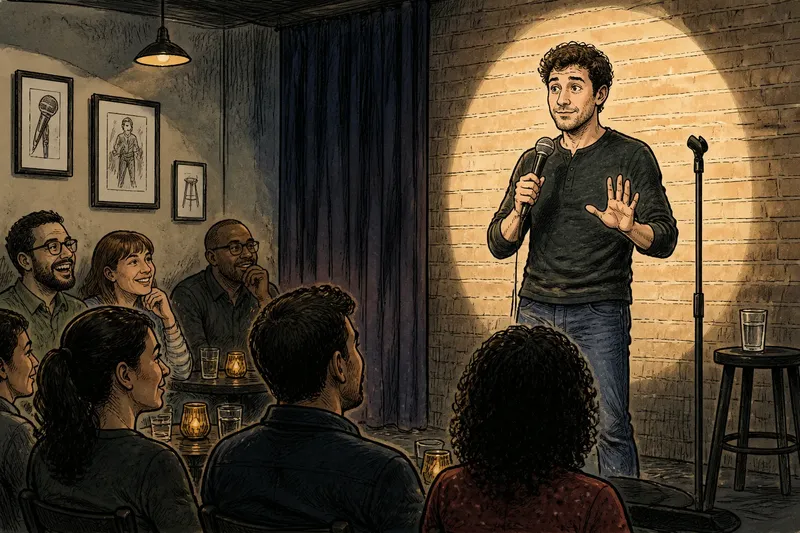
A punchline pause works when listeners need a moment to complete the setup’s expectation before the joke redirects it. In stand-up, that small space—the second beat—can make the turn easier to hear and the surprise more satisfying. But hold too long, and the audience may mistake suspense for the joke or start supplying a different ending.
Choose the pause by asking what the audience must do between the setup and punchline. If they need to picture a scene, recognize a pattern, or anticipate a familiar response, give them room. If the punchline already carries its own surprise, keep the turn moving.
Does the setup need time to land?
Use a pause when the setup gives listeners a clear image or situation they need to process. A detail such as a character’s posture, a location, or an oddly specific problem may take a moment to register. The pause lets the audience build that picture, so the punchline can alter it.
Say you have a bit about a neighbor who treats a tiny garden plot like a national park. The setup describes a hand-painted trail sign and a solemn welcome speech. After the speech, a brief pause lets the image settle; then the punchline reveals that the “visitor center” is a plastic storage tub. The expected result is that listeners see the contrast before they hear its comic turn.
Don’t pause just because a line feels important to you. If the audience can understand the setup as it is spoken, an extra beat may only drain its energy.
Is the punchline redirecting a strong expectation?
A pause is useful when the setup points toward one likely ending and the punchline takes another route. Listeners use the gap to predict; the line then replaces that prediction. The pause should be long enough for expectation to form, not so long that the audience becomes certain of an answer you do not intend.
This is especially helpful when the setup contains a familiar phrase, social convention, or recognizable problem. A pause after the cue can make the audience mentally finish the thought. The punchline then works against that completion.
For a more abrupt or absurd turn, try less space. If the setup already supplies a strong rhythm, a quick pivot can make the unexpected answer feel like an interruption rather than a carefully announced reveal.
Which situation calls for a shorter or longer beat?
Match the pause to what listeners are processing. A complicated image may need breathing room; a simple verbal feint usually needs less. Use these distinctions while rehearsing:
- Dense setup: Pause after the final detail if listeners need to assemble a scene or relationship.
- Obvious prediction: Leave a small gap where the audience is likely to complete the expected phrase.
- Fast wordplay: Keep the setup and turn close together so the sound or meaning stays connected.
- Physical action: Let the gesture or facial expression register before the spoken punchline changes its meaning.
- Already-laughing room: Wait for the audience to hear the next line clearly rather than speaking over their response.
- Low-energy delivery: Shorten a deliberate hold if it makes the joke feel hesitant instead of intentional.
A pause is not a fixed count. Listen for whether the audience has enough information to follow the turn, then adjust the space accordingly.
What should you do when a pause feels awkward?
First decide whether the awkwardness belongs to the joke or to the delivery. A character’s uncomfortable silence can itself be funny, but a performer’s uncertain wait may suggest that the line has gone missing. Make the distinction through intention: keep your posture and focus steady if the silence is part of the act; move on cleanly if it is not.
Try the setup and punchline at different speeds in rehearsal, preferably with a listener who can say where the image became clear and where the turn arrived. Don’t ask only whether the pause felt funny. Ask what they expected during it. Their answer can reveal whether the setup created the prediction your punchline needs.
If the listener cannot identify the situation before the punchline, clarify the setup rather than stretching the silence. If they can describe the expected ending, but the punchline still feels flat, examine whether the turn changes that expectation enough.
How does the pause change in a live room?
In a live set, the audience’s response can occupy the space you planned. If laughter rises after the setup, let it settle enough for the next line to be heard. If no response comes, don’t automatically wait longer; deliver the punchline with the timing the joke needs and use the next performance to assess the setup.
Room size, sightlines, and delivery also affect how quickly a moment reads. A visible gesture may register immediately for people near the stage and later for listeners farther away. Keep your attention on the whole room, not only on the first reaction you notice.
In a recorded performance, the same pause can feel unusually exposed because there is no live audience response to fill it. Trust the shape of the thought: leave space for comprehension, not for an imagined laugh that has not arrived.
Which timing questions help you choose?
Should I pause before every punchline?
No. A pause earns its place when listeners need time to form an expectation or understand the setup’s image. If the joke is clear and the turn is strongest at speed, deliver it without a deliberate hold.
How can I tell whether the audience needs more time?
Notice whether listeners seem to understand the setup before the punchline arrives. In rehearsal, ask a listener what they expected at the pause; if they cannot name the situation, clarify the setup rather than extending the gap.
Should I wait for laughter before continuing?
Give the audience space to hear the next line, but don’t treat every pause as a demand for laughter. When a response is small or absent, continue in the joke’s intended rhythm instead of prolonging the silence.
Can a pause itself be the punchline?
Yes, if the silence reveals embarrassment, disbelief, or a character’s attempt to avoid saying the obvious. Make that intention readable through your expression and focus; otherwise, listeners may assume you have lost your place.
How can you make the second beat deliberate?
Mark the pause in your script only where it changes what the audience can understand or predict. Rehearse the line aloud, first with no pause and then with a small one. Choose the version that makes the setup’s expectation clearest without weakening the punchline’s arrival.
For a punchline pause, the useful question is not how long silence should last. Ask what the audience is doing in that silence. Give them time to picture, predict, or recognize—and move on as soon as the turn can land.