Before the Sitcom: How Radio Comedy Made a Room
Radio comedy shaped sitcom scene-making through dialogue, sound, and imagined space. See how radio techniques clarify setting and sharpen comic action.
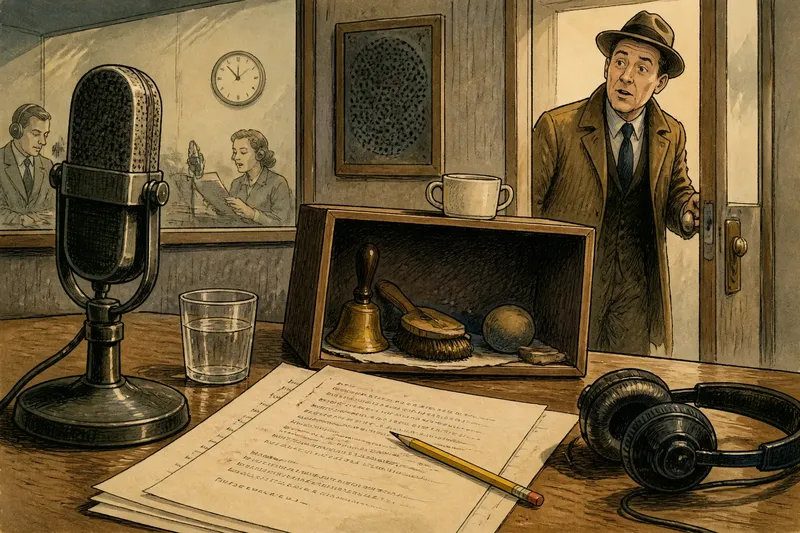
Radio comedy gave early sitcom writers a way to make a room audible before television could show it. In British broadcasting, the BBC radio series Hancock’s Half Hour became a television sitcom in 1956, carrying its central character and comic world from sound into pictures. The shift did not erase radio’s craft: dialogue, entrances, pauses, and sound cues still helped define how a scene worked.
How did radio comedy make a room?
Radio writers established place through speech, sound, and the listener’s imagination. A character might complain about a draft, a door might click shut, and a visitor might call from the hall. Together, those clues locate the action without a visual set.
Radio comedy had a long broadcast history before television sitcoms became a familiar format. One notable British example is Hancock’s Half Hour, which began on radio and later moved to television with Tony Hancock and much of the same writing team. Its transition makes the relationship concrete: a comic character and situation could survive a change of medium, while the new medium added visible performance and scenery.
The transfer was not simply a matter of putting a camera around a radio script. In radio, a line may need to identify a place that television can show. On television, a set can establish the room at a glance, but dialogue and sound still guide attention to the comic business inside it.
What did radio techniques give sitcoms?
Radio taught sitcom writers to make a scene understandable through what characters do and say, not only through what a set contains. A door opening can announce an interruption. Footsteps stopping outside a room can create a pause before a character decides whether to answer. In a television sitcom, the audience can see the door, but its sound and timing still shape the joke.
Radio also encouraged economical scene changes. A brief sound or spoken cue can move listeners from a kitchen to a hallway. Television can show the new location, yet a clear entrance, exit, or shift in room tone helps the audience follow the action and keeps the transition from feeling arbitrary.
These are continuities of craft, not proof that every sitcom technique came from radio. Television developed its own visual tools, including framing, editing, and physical business. The useful connection is narrower: both forms need to orient an audience and direct attention toward the comic turn.
How can a sound cue carry a sitcom joke?
A cue earns its place when it changes what the audience understands. A telephone ring interrupts a careful explanation; the silence afterward can reveal that nobody wants to answer. A door opening can expose a character who claimed to be alone.
Think of sound as an event, not wallpaper. “Street ambience” may establish that a scene is outdoors, but a delivery cart rattling past during a character’s claim that the street is empty gives the sound a comic job. In a sitcom, the audience may see the street as well; the cue can still underline the contradiction without an extra line.
Keep cues distinct enough to hear. A short knock, a chair scrape, or a single bell is easier to interpret than a wash of competing noises. Choose the sound that marks a threshold, interrupts a conversation, or changes a character’s behavior.
How can dialogue make a sitcom setting specific?
Specificity comes from how people use a room, not from listing its furnishings. “The waiting room has four chairs and a clock” inventories the set. “Don’t sit there; the spring’s been trying to escape since Tuesday” gives a character an attitude and turns the chair into a problem.
Let people notice their surroundings for reasons they would have anyway. Someone complains about a draft because it is cold. Someone whispers because a thin wall carries the neighbors’ voices. In radio, those lines help listeners construct the room; in a sitcom, they can make a visible set feel inhabited rather than merely displayed.
Dialogue can also map connected spaces. One character calls from the hall while another answers from the kitchen. The exchange establishes a passage between them and gives an actor a reason to cross it. Repeated entrances and exits can build that map without a speech explaining the floor plan.
When should a sitcom explain what the audience cannot see?
Explain an unseen detail when it affects the action, the joke, or a character’s understanding. On radio, a silent point toward a stain communicates nothing by itself; a line such as “That stain wasn’t there when I rented this place” makes it audible. On television, the camera can show the stain, but a character’s reaction may still tell us why it matters.
Do not translate every movement into dialogue. A drawer can make a sound if what is inside matters. If opening it is routine, the scene may not need a cue or a line. Select details that help the audience follow the action.
Say you are writing an invented scene in a cramped lost-property office. The starting point is a clerk who insists that nobody has returned a red umbrella. You add a wet umbrella dripping beside the desk while its owner waits in silence, then have the clerk notice the puddle and change the subject. The audible drip and the clerk’s evasion lead listeners to infer the lie; on a sitcom set, the visible umbrella can confirm the same comic information without a narrator.
What do writers ask about radio comedy and sitcoms?
Does a sitcom need narration to establish a room?
No. A set, character behavior, and a few purposeful lines can orient viewers without a narrator. Narration is useful when the story needs information no character would naturally say, but constant explanation can flatten a scene.
How much background sound should a sitcom scene use?
Use enough sound to distinguish the place or support an action, then leave room for speech. A door, a room tone, or a recurring machine can orient the audience more clearly than continuous noise.
Can a sound cue deliver a sitcom punchline?
Yes, when the cue changes the meaning of what came before or supplies an unexpected response. A character can claim the office is empty just as a coat rack collapses, letting the crash contradict the claim without another line.
How can a sitcom change locations without confusing viewers?
Show or sound the transition with an entrance, exit, or clear shift in the scene. Then establish the new space through an action or detail that matters to the next exchange.
Why does radio’s imagined room still matter to sitcom writing?
Listeners build a place from the clues a radio script provides; sitcom viewers see a set but still interpret what characters notice, ignore, and disturb. Radio’s economy remains useful because it asks writers to choose details that carry information rather than decorate a scene.
For a practical check, identify what the audience needs to know at each moment. If the room is unclear, add the lightest useful clue: a line, an entrance, or a sound. If the setting is already obvious, let the characters get on with the comic action.
The relationship between radio comedy and the sitcom is clearest in that shared discipline: establish the space, then make it matter. A room becomes comic not because every object is described or shown, but because a character’s behavior turns one of its details into a problem.